A few days ago (May 19) I attended the AI fokus conference. I attended last year as well, and I think this year’s version was improved with even better talks. It was a great venue, very well planned with good breaks for coffee and lunch and I had lots of interesting conversations with different people during the breaks. Always fun to meet people you haven’t seen in a few years.
I think that the main themes this time were quality and context: how to build with quality and avoid AI slop code, different aspects of tech health and how to handle the right amount of context. There were also lots of discussions about different flavors of agent workflows and agents.
Here are a few talks I enjoyed and recommend:
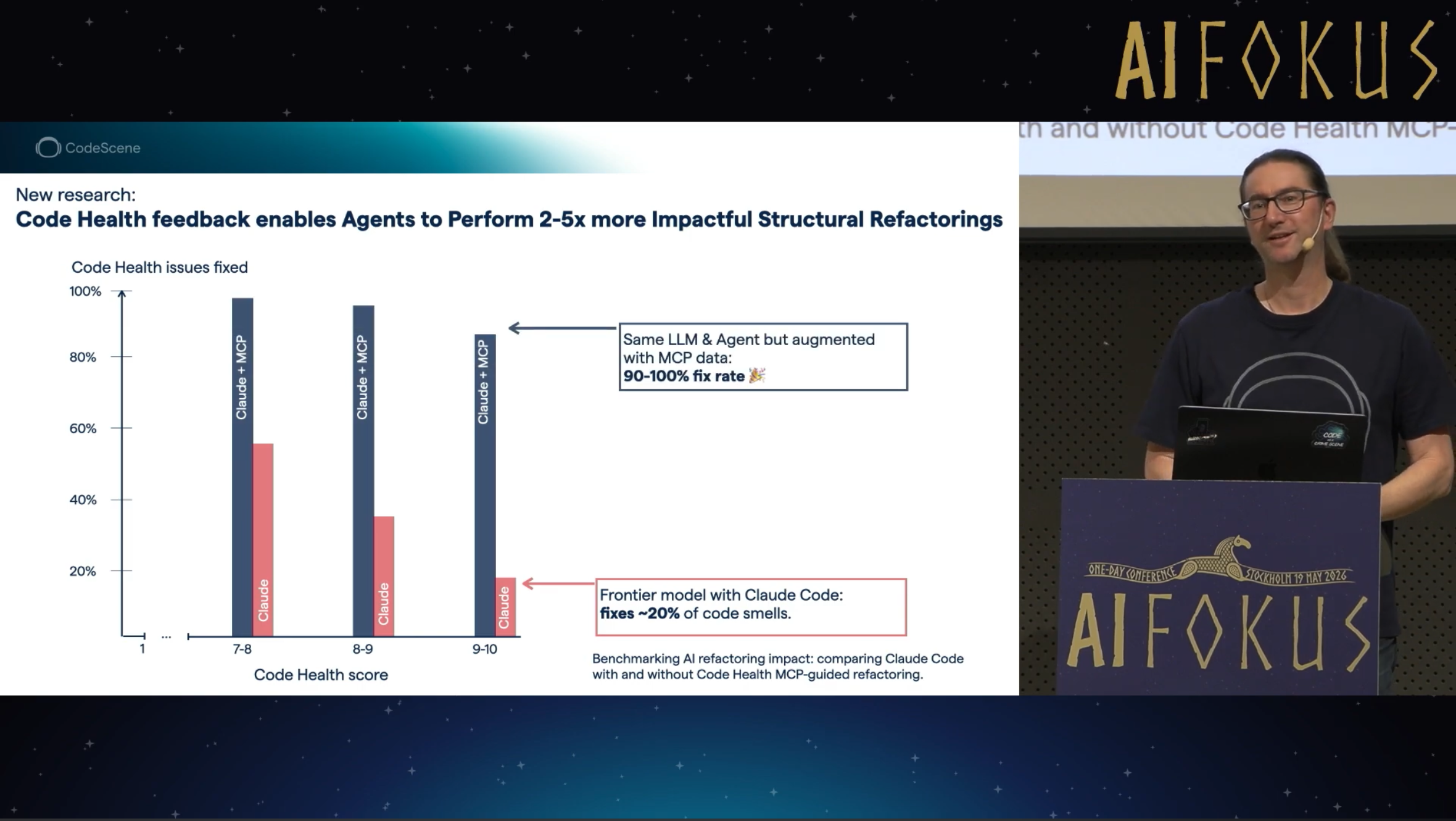
Agentic AI Coding Practices for Speed with Quality, by Adam Tornhill
Agentic AI Coding Practices for Speed with Quality, by Adam Tornhill
Adam mentions how AI agents often cause 41% more defects and that initial AI velocity gains quickly can be cancelled out after two months because of a huge increase in code complexity. He suggests adding code health to the process to make sure that code becomes healthy and easy to read and maintain for both humans and AI agents. He argues that healthy code makes engineers 10x faster. He also mentions the CLEAR principles for software design in the agentic age. Conceptual alignment. Local reasoning. Explicit intent. Avoid search luck. Reduce the edit surface.
Don’t miss the part about code coverage (25 min in), where he states that you should have 100% code coverage with agents (“agents, they have this interesting tendency of sometimes fixing a failing regression test by deleting it”).
Agentic AI Coding Practices for Speed with Quality, by Adam Tornhill (Youtube)
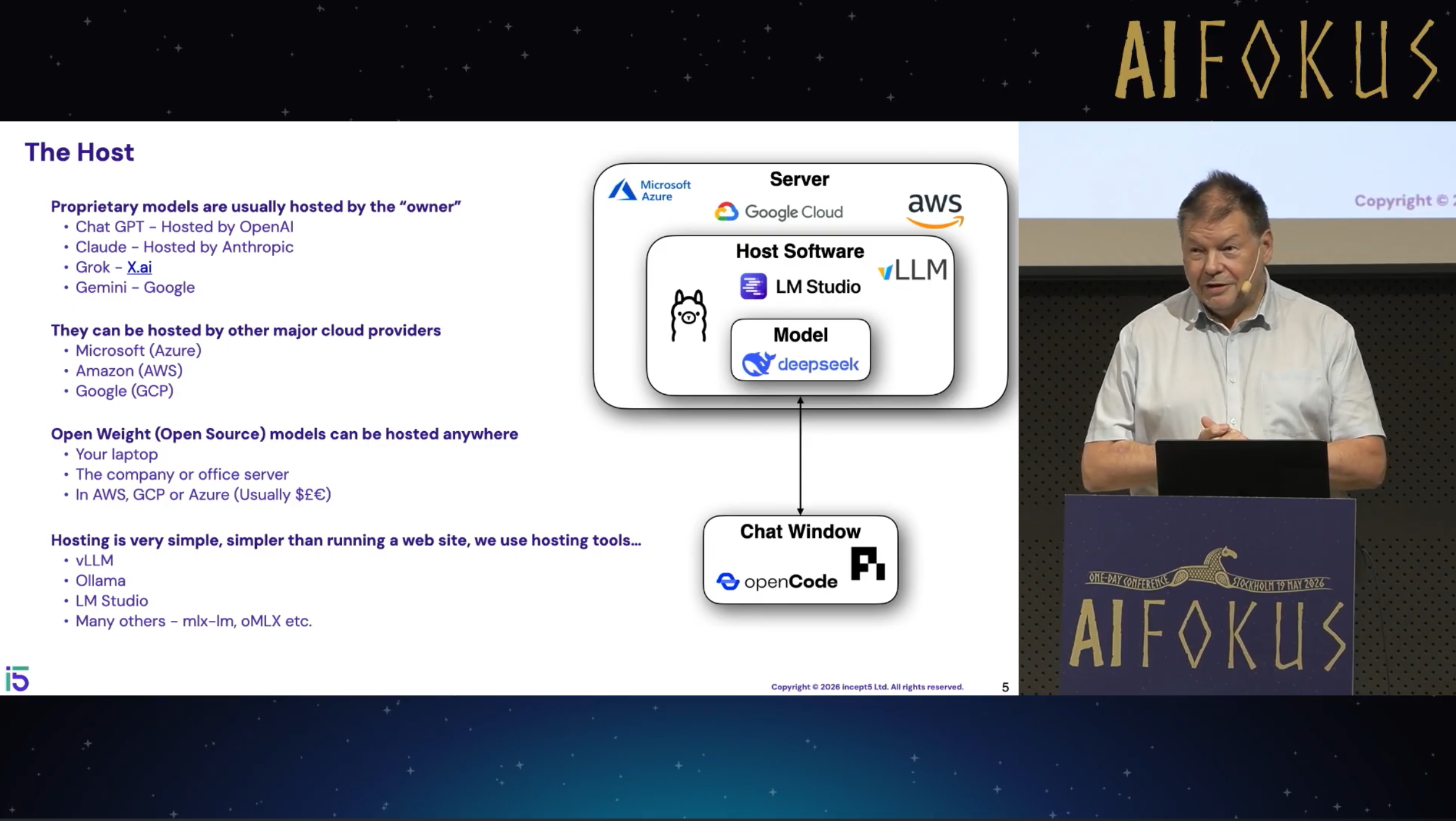
Own Your LLM: Running Generative and Agentic AI Locally, by John Davies
Own Your LLM: Running Generative and Agentic AI Locally, by John Davies
A very interesting and entertaining talk about how to use the right model, open source tools and how to reason about it. I found this very interesting since I have played around with local LLMs lately and want to learn more about it. My MacBook can definitely run many models without problem. I got lots of fun ideas from this talk that I would like to experiment with. I did not know that we already can run good models on phones - so that’s also something to investigate further.
Own Your LLM: Running Generative and Agentic AI Locally, by John Davies (Youtube)
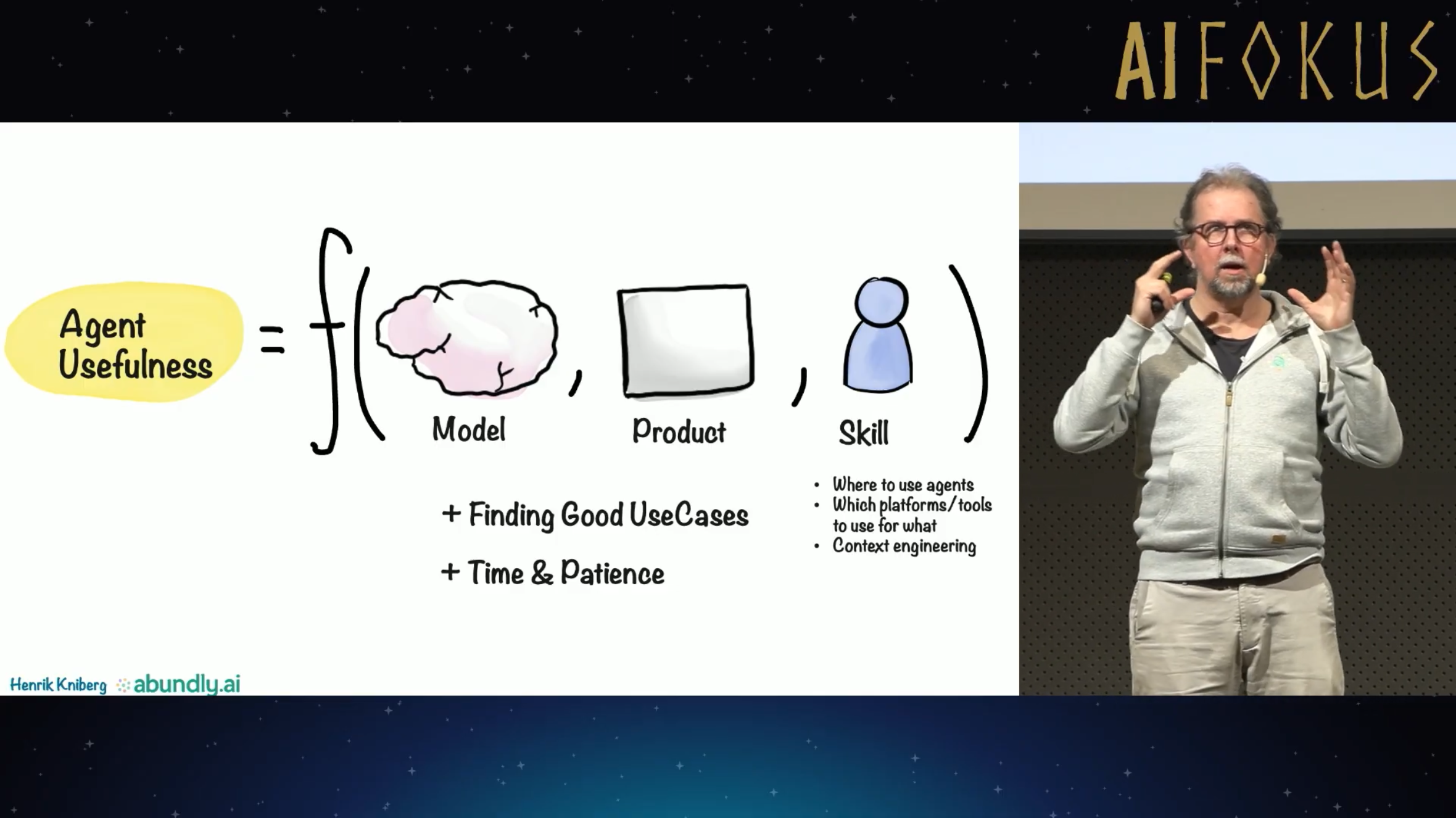
AI agents in practice - beyond the prototype, by Henrik Kniberg
AI agents in practice - beyond the prototype, by Henrik Kniberg
Henrik is always a great speaker, here he described how they work with their internal agents at Abundly and gave some good tips and tricks to think about when choosing what problems to delegate to agents and how to implement good agent workflows.
AI agents in practice - beyond the prototype, by Henrik Kniberg (Youtube)
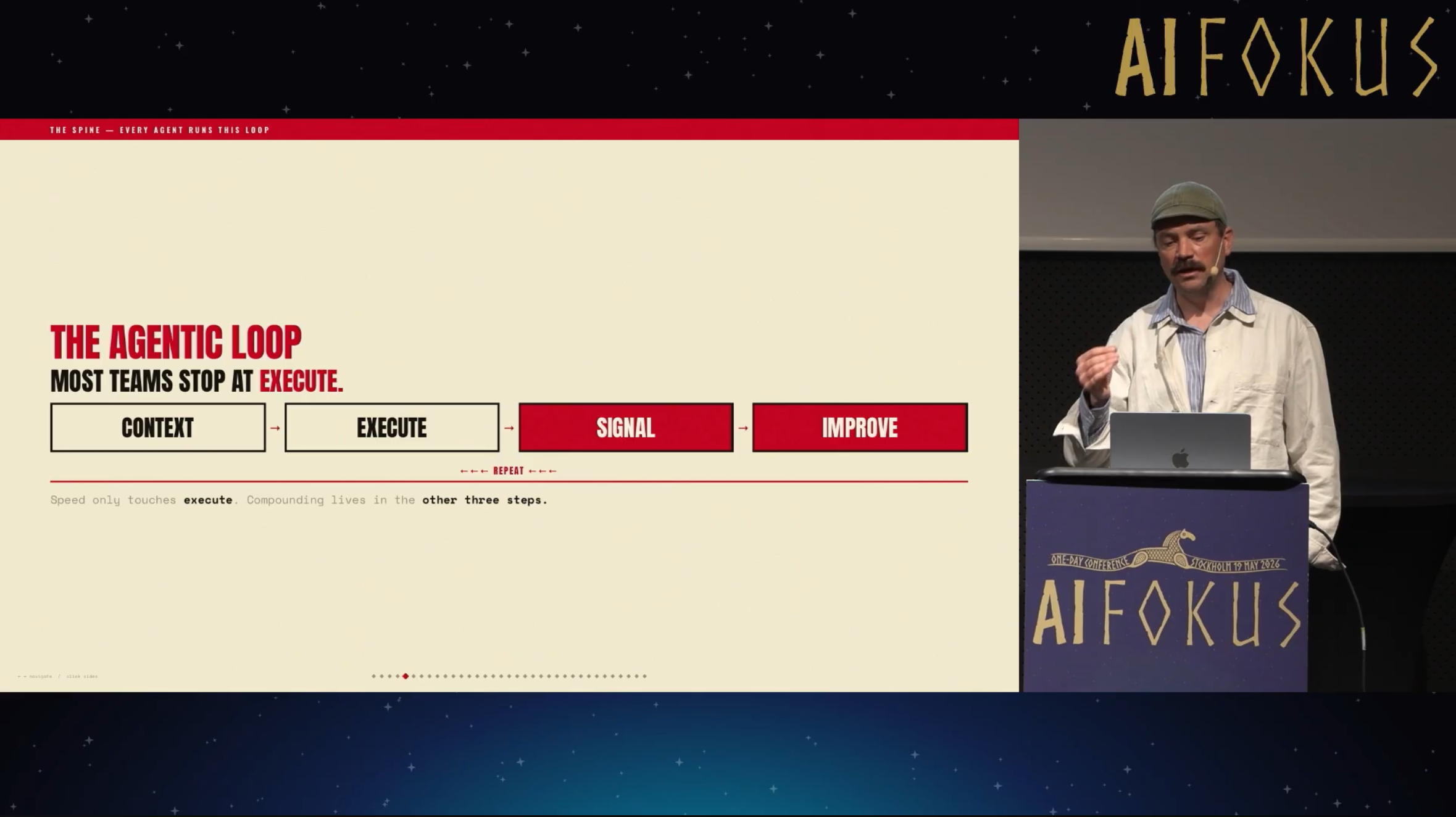
Agentic workflows that compound, by Magnus Gille
Agentic workflows that compound, by Magnus Gille
Similar to the other talk he held at Agentic dev days, discussing how you should have an agent act as a senior grumpy engineer to review and improve other agent’s work. He talked about how he works with persistent context, by having his own physical context drive.
Agentic workflows that compound, by Magnus Gille (Youtube)
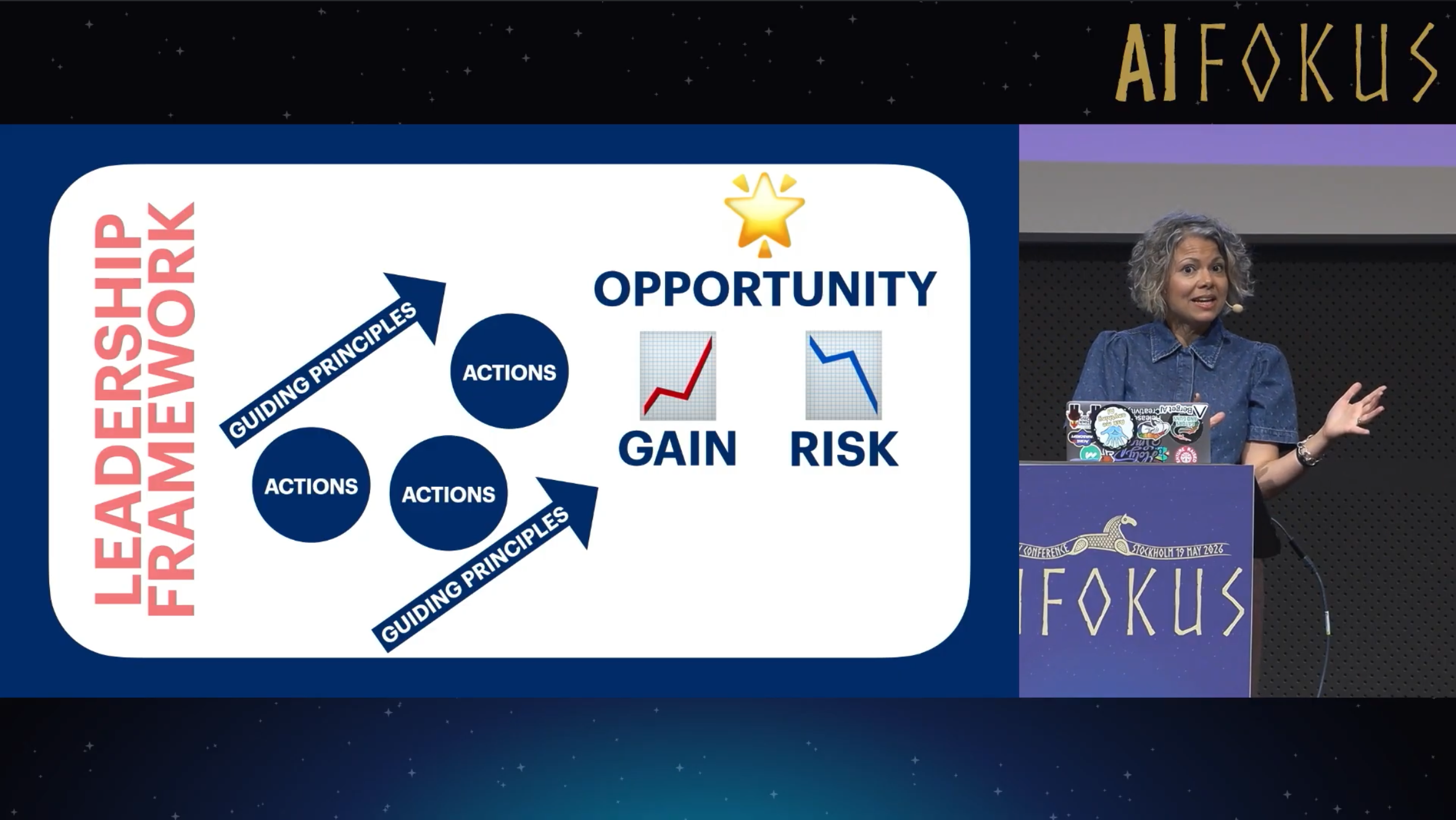
Making AI Adoption Work: A Practical Structure for Modern Software Development, by Cecilia Borg
Making AI Adoption Work: A Practical Structure for Modern Software Development, by Cecilia Borg
Cecilia described what to think about when trying to introduce AI into an organisation. She describes something that more and more people realize, that the bottleneck moves with AI adoption – when code is no longer the bottleneck, what happens next? She also talks about how AI productivity correlates to good tech health (for example the DORA metrics).
Making AI Adoption Work: A Practical Structure for Modern Software Development, by Cecilia Borg (Youtube)
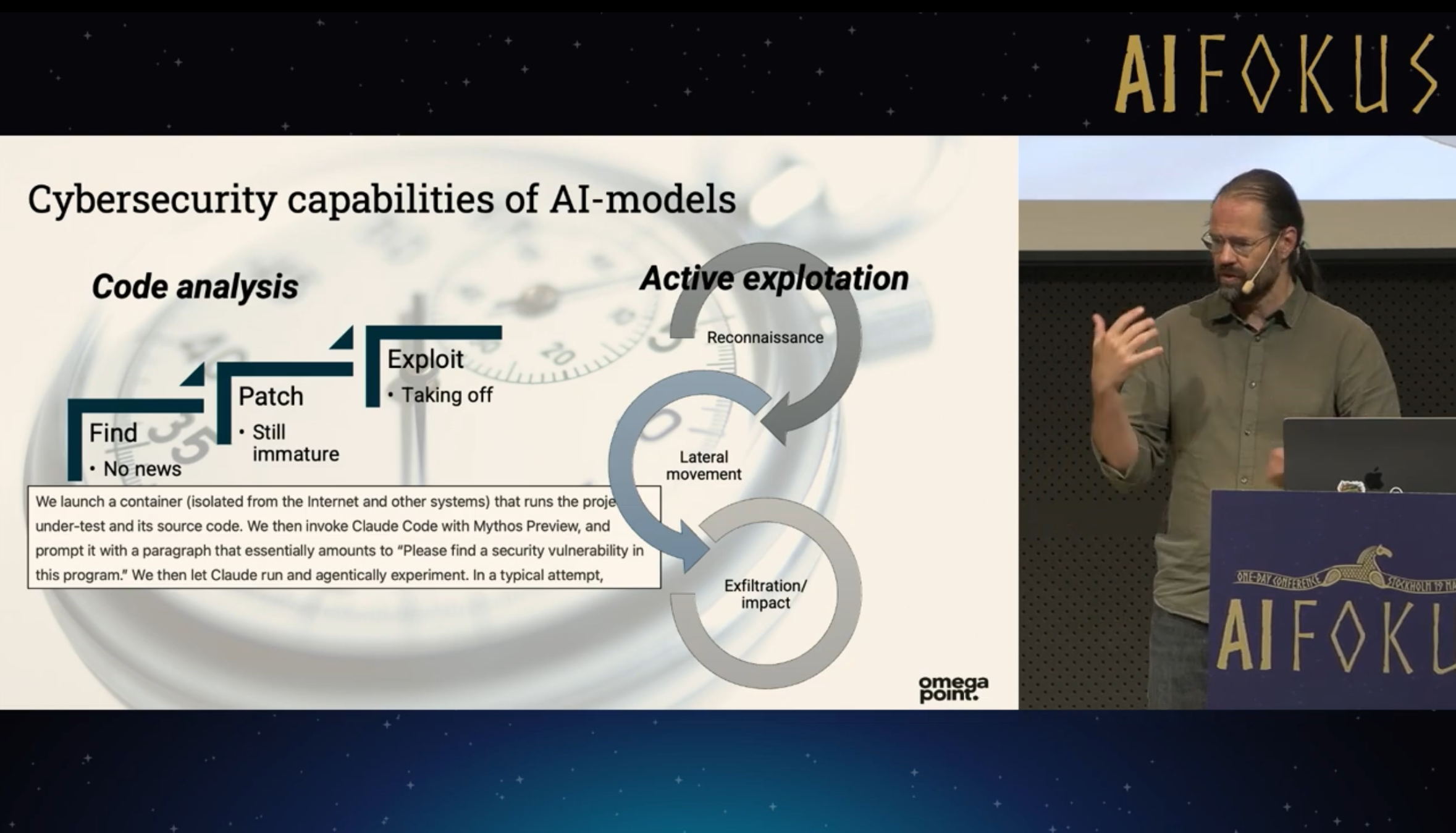
Mythos & Glasswing, What we actually know, by Dan Bergh Johnsson
Mythos & Glasswing, What we actually know, by Dan Bergh Johnsson
Dan describes what we actually know about Mythos and project Glasswing. Don’t panic - but definitely get started! “The time it takes from finding a vulnerability into making an exploit is getting dramatically shorter. And the number of actors that are able to take an vulnerability and craft an exploit is getting dramatically larger.”
Mythos & Glasswing, What we actually know, by Dan Bergh Johnsson (Youtube)
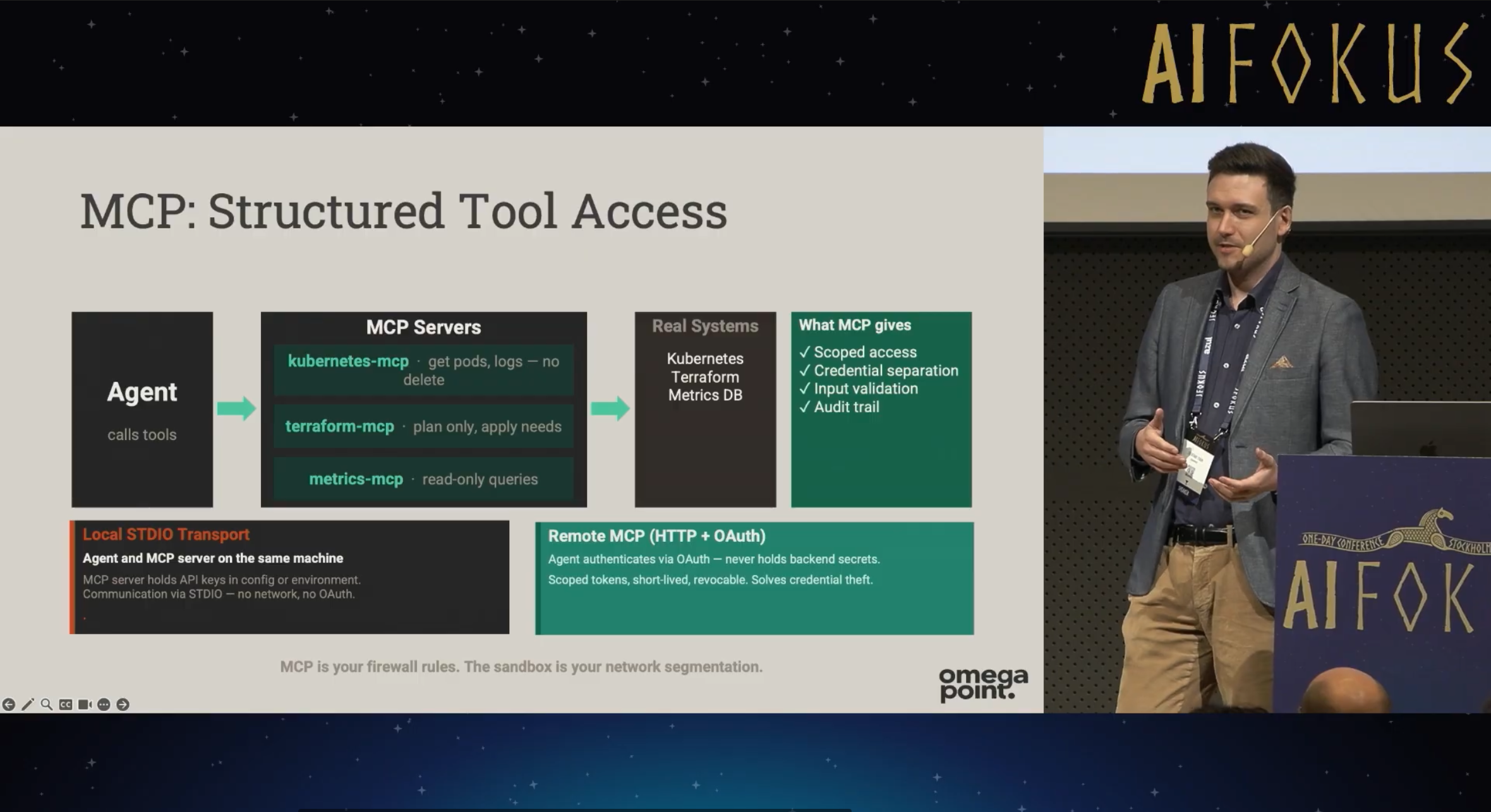
Zero Secrets: Building Secure Infrastructure for AI Agents, by Jonathan Ström
Zero Secrets: Building Secure Infrastructure for AI Agents, by Jonathan Ström
Jonathan gave some fun examples of agents gone rogue and what to think about to build secure infrastructure for agents. He talked about setting up a good environment with sandboxes and structured MCP tool access. He also made a good case for having sandboxes where the agent actually can delete itself, without any blast radius.
Zero Secrets: Building Secure Infrastructure for AI Agents, by Jonathan Ström (Youtube)
Since there were three tracks I didn’t have time to watch all the talks of course, so I will continue watching recordings of some I missed. Did I miss a really interesting one? Let me know!
You can find all videos here on Youtube